
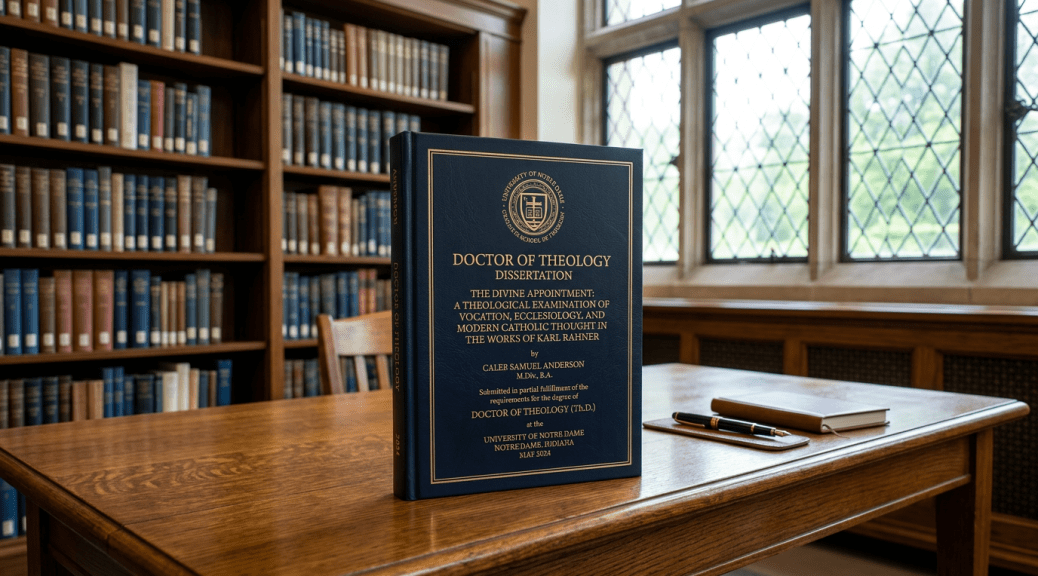
A standard Doctor of Theology dissertation usually contains:
Front Matter
Title Page
Approval Page / Certification Page
Abstract
Dedication
Acknowledgments
Table of Contents
List of Tables
List of Figures
List of Abbreviations
AIIAS notes that dissertation formatting usually covers margins, spacing, title page, preliminary page order, page numbering, headings, and tables/figures.
Main Body
Chapter 1 – Introduction
Background of the Study
Statement of the Problem
Purpose of the Study
Research Questions
Significance of the Study
Scope and Delimitations
Definition of Terms
Methodology Overview
Chapter 2 – Review of Related Literature
Biblical Literature
Theological Literature
Historical Literature
Contemporary Studies
Research Gap
Chapter 3 – Methodology
Research Design
Sources / Texts / Participants
Hermeneutical or Theological Method
Data Collection Procedure
Data Analysis Procedure
Ethical Considerations, if applicable
Chapter 4 – Presentation and Analysis
Exegetical Analysis
Historical-Theological Analysis
Doctrinal Analysis
Pastoral/Practical Findings
Chapter 5 – Theological Synthesis and Implications
Major Findings
Theological Contribution
Implications for Doctrine
Implications for Ministry
Recommendations
End Matter
Bibliography / References
Appendices
Research Instruments, if any
Curriculum, sermon series, training module, or ministry output, if applicable
3. Sample Doctor of Theology Dissertation Titles
From Concordia Seminary’s Doctor of Theology dissertation list, sample titles include:
“The Mission and Ministry to German-Speaking Lutherans in Western Canada, 1879–1914”
“Postliberal Approaches to the Theology of Religions: Presentation, Assessment, and Critical Appropriation”
“Orality as the Key to Understanding Apostolic Proclamation in the Epistles”
“Genre and Outline: The Key to the Literary Structure of Hebrews”
“When God Becomes Your Enemy: The Theology of the Complaint Psalms”
“The Missiological Significance of the Doctrine of Justification in the Lutheran Confessions”
“The Doctrine of God in African Traditional Religion”
4. Suggested MBS-Style Sample Titles
- A Biblical-Theological Study of Intentional Discipleship in 2 Timothy 2:2 and Its Application to Organic Church Growth
- The Theology of Calling: A Biblical and Practical Framework for Vocational Discernment in Contemporary Ministry
- The Role of Prevenient Grace in Wesleyan Theology and Its Relevance to Evangelistic Discipleship
- A Christ-Centered Hermeneutical Model for Preaching Old Testament Narratives
- The Doctrine of the Church as a Disciple-Making Community: A Biblical, Historical, and Practical Study
- The Use of Artificial Intelligence as a Ministry Tool: A Theological Evaluation of Study, Stewardship, and Preaching Responsibility
- A Biblical-Theological Framework for Self-Paced Theological Education Among Bi-Vocational Ministers
- The Theology of Suffering and Triumph in James 1:2–8: An Exegetical and Pastoral Study
- The Role of Prayer in Spiritual Formation: A Biblical and Practical Theology for Local Churches
- An Evaluation of Online Bible School Models for Equipping Rural and Working Ministers in the Philippines
5. How to Do the Dissertation
Use this process:
- Choose a theological problem, not only a topic.
Example: “Many churches teach discipleship, but lack a reproducible biblical structure.” - Write a clear research question.
Example: “How can 2 Timothy 2:2 provide a biblical-theological framework for intentional discipleship and multiplication?” - Define your method.
For theology, common methods include biblical-exegetical, historical-theological, systematic-theological, practical-theological, qualitative ministry research, or mixed method. - Review literature.
Include books, journal articles, dissertations, commentaries, theological dictionaries, and denominational sources. - Analyze Scripture and theology.
Use exegesis, word study, context, canonical theology, historical interpretation, and doctrinal synthesis. - Show original contribution.
A dissertation must not only repeat existing books. It must contribute a model, correction, framework, evaluation, or fresh theological synthesis. - Defend the dissertation.
Most doctoral programs require proposal approval, adviser/committee review, final manuscript submission, and oral defense. Some require strict submission formatting and publishing compliance, such as ProQuest formatting rules.
6. Full Sample Dissertation Outline
Title:
A Biblical-Theological Framework for Intentional Discipleship Based on 2 Timothy 2:2 and Its Application to Organic Church Growth
Abstract
Brief summary of the problem, purpose, method, findings, and contribution.
Chapter 1: Introduction
- Background of the Study
- Statement of the Problem
- Purpose of the Study
- Research Questions
- Significance of the Study
- Scope and Delimitations
- Definition of Key Terms
- Research Methodology
- Structure of the Dissertation
Chapter 2: Review of Related Literature
- Biblical Studies on Discipleship
- Pauline Theology of Transmission
- Historical Models of Discipleship
- Contemporary Church Growth Models
- Organic Church Growth Literature
- Research Gap
Chapter 3: Exegesis of 2 Timothy 2:2
- Historical Context of 2 Timothy
- Literary Context of 2 Timothy 2
- Greek Word Study
- Four-Generation Pattern: Paul, Timothy, Faithful Men, Others
- Theological Themes: Trust, Teaching, Transmission, Multiplication
- Summary of Exegetical Findings
Chapter 4: Theological Synthesis
- Discipleship as Biblical Mandate
- Discipleship as Theological Formation
- Discipleship as Reproducible Ministry
- Discipleship and the Local Church
- Christ-Centered Foundation of Multiplication
Chapter 5: Practical Application Model
- Proposed Discipleship Framework
- Leadership Training Process
- Church-Based Implementation
- Evaluation and Accountability
- Strengths and Limitations
Chapter 6: Conclusion and Recommendations
- Summary of Findings
- Theological Contribution
- Ministry Implications
- Recommendations for Churches
- Recommendations for Further Research
7. APA 7 Dissertation Reference Format
APA’s official style distinguishes between published and unpublished dissertations. Published dissertations commonly include the title, publication number if available, degree type, institution, and database/archive. Unpublished dissertations use “[Unpublished doctoral dissertation]” and the institution name.
Published dissertation in database:
Author, A. A. (Year). Title of dissertation (Publication No. XXXXX) [Doctoral dissertation, University Name]. Database Name.
Dissertation in institutional archive:
Author, A. A. (Year). Title of dissertation [Doctoral dissertation, University Name]. Archive Name.
Unpublished dissertation:
Author, A. A. (Year). Title of dissertation [Unpublished doctoral dissertation]. University Name.
8. Sample APA References
American Psychological Association. (2020). Publication manual of the American Psychological Association (7th ed.). American Psychological Association.
Vyhmeister, N. J., & Robertson, T. D. (2014). Quality research papers: For students of religion and theology (3rd ed.). Zondervan.
Turabian, K. L. (2018). A manual for writers of research papers, theses, and dissertations (9th ed.). University of Chicago Press.
Society of Biblical Literature. (2014). The SBL handbook of style (2nd ed.). SBL Press.
Osmer, R. R. (2008). Practical theology: An introduction. Eerdmans.
Swinton, J., & Mowat, H. (2016). Practical theology and qualitative research (2nd ed.). SCM Press.
9. Best Recommendation for MBS
For Doctor of Theology, use this structure:
Chapter 1 – Introduction
Chapter 2 – Literature Review
Chapter 3 – Biblical/Theological Methodology
Chapter 4 – Exegesis or Theological Analysis
Chapter 5 – Practical Ministry Application
Chapter 6 – Conclusion and Recommendations
For citation style, MBS may choose:
APA 7 – best for education, leadership, ministry research, psychology, qualitative studies.
Turabian/SBL – best for biblical studies, theology, church history, exegesis, doctrine.
My recommendation: Use Turabian/SBL for pure theology and biblical studies, but allow APA 7 for practical theology and ministry research.

