

DOCTORATE COURSE AND SUBJECT DESCRIPTIONS
At MOBILE BIBLE SCHOOL (MBS), we acknowledge the value of continuing education for those in ministry, theology, and Christian education. You may be a pastor seeking deeper practical skills. Or you might be a scholar aiming for academic excellence. Understanding the different paths of advanced theological education can help you make informed decisions about your future.
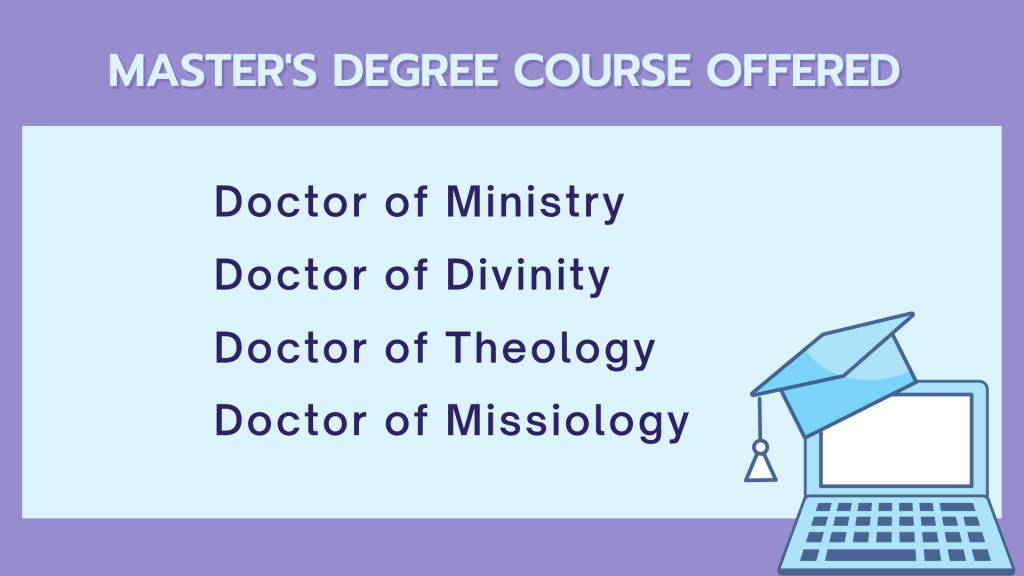
In the world of theological studies, several doctoral programs cater to various interests and career aspirations. Below, we offer a detailed comparison of five prominent doctoral degrees: Doctor of Divinity (D.D.), Doctor of Theology (Th.D.), Doctor of Ministry (D.Min.), Doctor of Missiology (D.Miss.), and Doctor of Christian Education (D.C.E.). Each degree offers unique opportunities for spiritual growth, leadership, and scholarly contribution.
Let us explore these options to find the path that aligns with your passion for ministry, mission, and education.
1. Doctor of Divinity (D.D.)
- Field Focus: Broad, covering various aspects of theology, ministry, and ecclesiastical leadership.
- Purpose: Often honorary, given in recognition of outstanding contributions to the church or religious scholarship. In rare cases, it can be an academic degree, but more commonly it is an honorary title.
- Curriculum: Typically does not have a structured curriculum due to its honorary nature. However, in academic contexts, it could cover church leadership, theology, and biblical studies.
- Career Path: Honorary recipients may be recognized as religious leaders or scholars. When awarded as an academic degree, it’s typically for experienced church leaders and academics.
2. Doctor of Theology (Th.D.)
- Field Focus: Intensive focus on theology, particularly in doctrinal, historical, biblical, and systematic theology.
- Purpose: To train scholars for advanced research and academic careers in theology.
- Curriculum: Includes deep engagement with theological texts, languages (e.g., Hebrew, Greek), and philosophical theology. It emphasizes original research and contributes to the academic understanding of theology.
- Career Path: Primarily academic roles such as professors, authors, or researchers in theology.
Th. D. – Core Subjects
- Pastoral Theology for the 21st Century Church
A practical study on the evolving role of the pastor in modern ministry. This subject explores biblical shepherding, digital-age challenges, pastoral care, and effective leadership models tailored for contemporary congregations. - Theological Study of Genesis 1–11
A foundational theological exploration of the early chapters of Genesis. Students will engage with themes of creation, fall, judgment, and covenant, with comparative analysis of ancient Near Eastern contexts and implications for Christian doctrine. - Parallel Study of the Book of Revelation 1–22
A deep exegetical and theological study of Revelation using four major interpretative lenses: Preterism, Historicism, Futurism, and Idealism. This course equips students to appreciate prophetic diversity while remaining biblically grounded. - 21st Century Christian Ethics
This subject addresses ethical issues facing the global church today—bioethics, sexuality, justice, technology, and culture—through a biblical worldview. Students will learn to respond with theological clarity and moral conviction. - Biblical Foundation of Leadership
A leadership course tracing biblical leadership principles from Genesis to Revelation. It integrates scriptural insights with contemporary leadership models, equipping ministers to lead with integrity, vision, and servanthood.
3. Doctor of Ministry (D.Min.)
- Field Focus: Practical ministry with a strong focus on applied theology, pastoral care, and leadership.
- Purpose: To equip ministry professionals (pastors, chaplains, church leaders) with advanced training for practical and pastoral leadership.
- Curriculum: Combines theological education with practical applications, including counseling, leadership, and spiritual formation. Often includes a project or thesis that addresses a ministry-related issue.
- Career Path: Senior pastoral roles, chaplaincy, leadership positions in churches, or other ministry settings.
D. Min. Core Subjects
- Theological Study of the Trinity
A profound examination of the doctrine of the Triune God—Father, Son, and Holy Spirit. This course explores biblical foundations, historical development, and practical implications for ministry, worship, and discipleship. - 21st Century Pastoral Theology
A contemporary look at pastoral leadership in today’s complex world. Students will explore the evolving nature of pastoral care, church dynamics, and cultural engagement while remaining rooted in biblical truth. - Theology of Music, Praise, and Worship
A theological and practical study on the role of music in the life of the church. This subject addresses the biblical basis for worship, historical practices, and the impact of music ministry in shaping church identity and spiritual formation. - Remastering Church Financial Management
A practical and biblical guide to managing church resources with integrity, transparency, and wisdom. Topics include budgeting, stewardship, fundraising, and ethical financial leadership in ministry settings. - Genesis 1–11
A foundational study of the first eleven chapters of Genesis, focusing on creation, the fall, and the early history of humanity. This course emphasizes theological themes essential to understanding God’s redemptive plan and their relevance for ministry today.
4. Doctor of Missiology (D.Miss.)
- Field Focus: The study of missions, intercultural theology, and evangelism.
- Purpose: To prepare scholars and practitioners for leadership in global missions and evangelistic work.
- Curriculum: Focuses on the theology of missions, anthropology, cross-cultural communication, and contextual theology. Research often deals with how Christianity interacts with other cultures.
- Career Path: Mission field leadership, academic positions in missiology, or roles in mission organizations.
D. Miss. Core Subjects
- Biblical Theology of Mission
A comprehensive study of mission as a central theme throughout Scripture—from Genesis to Revelation. This subject highlights God’s redemptive plan for the nations and the church’s calling to participate in His global purpose. - Cross-Cultural Evangelism and Discipleship
Equips students to understand, communicate, and minister effectively across cultural boundaries. Includes strategies for contextualizing the gospel while maintaining biblical fidelity. - Mission Strategies for the 21st Century
Explores innovative and effective mission models for today’s world. This includes church planting and digital evangelism. It also involves unreached people groups and global partnerships. - History and Theology of Global Missions
A historical survey of Christian missions spans from the early church. It continues to the modern era. It includes theological reflections on missionary movements and martyrdom. It also covers global church expansion. - Missional Leadership and Church Multiplication
Focuses on developing Spirit-led and mission-minded leaders. These leaders can raise up disciples and plant churches. They lead movements that multiply healthy, indigenous churches around the world.
5. Doctor of Christian Education (Ed.D. or D.C.E.)
- Field Focus: Christian education, including educational theory, curriculum development, and administration in church or Christian school settings.
- Purpose: To train educators and leaders in Christian educational institutions.
- Curriculum: Covers educational theory, pedagogy, curriculum development, and sometimes theology, with a focus on how to teach the Christian faith.
- Career Path: Leadership roles are available in secular schools or Christian schools. Opportunities also exist in seminaries or churches. These include positions such as secular or Christian school administrators, curriculum developers, or professors of Christian education.
Ed.D. / D.C.E. – Core Subjects
- Philosophy and Theology of Christian Education
A foundational study of the biblical, theological, and philosophical principles behind Christian education. Students explore God-centered teaching models and the spiritual formation of learners. - Curriculum Development and Instructional Design
Focuses on creating biblically sound curricula. It ensures pedagogically effective curricula for various learning contexts—churches, Bible schools, and online platforms. Includes lesson planning, course structuring, and assessment strategies. - Educational Leadership in Church and Ministry
Equips Christian educators to lead with vision and integrity. Emphasizes servant leadership, team development, decision-making, and mentoring in Christian learning environments. - Teaching and Learning Styles in Christian Education
Examines how people learn and how to teach accordingly. Students assess learning theories, teaching methods, and the integration of faith with cognitive, affective, and spiritual learning domains. - Christian Education in a Digital World
Engages with the challenges and opportunities of teaching in the 21st century. Topics include digital discipleship, online classroom management, content creation, and the ethical use of technology in ministry.
ELECTIVE SUBJECT DESCRIPTION
BS 4013 Dispensation and Covenant
This course explores two foundational systems in conservative Protestant theology: covenantalism and dispensationalism. Students will investigate various perspectives within these theological frameworks, delving into how covenants and dispensations are used throughout Scripture. Emphasis will be placed on understanding the biblical basis for each system and their implications for theology and Christian life.
BS 4023 Biblical Geography and Archeology
This course examines the intersection of archaeology, ancient texts, and the Bible, emphasizing how historical discoveries affirm the accuracy of Scripture. Students will study the cultures, customs, languages, and rituals of the biblical world, enhancing their understanding of the historical context of God’s Word. By interpreting archaeological findings through a biblical lens, students will see how these discoveries illuminate the Bible’s narratives.
MUA 4013 Theology of Music and Worship
This course offers a deep exploration of the biblical foundations of music and its role in worship across both the Old and New Testaments. Contemporary church music will be analyzed, considering how modern culture and technology shape the worship experience. Students will also critically assess the work of contemporary Christian composers to determine whether their compositions prioritize performance over theological soundness and biblical engagement.
BI 4013 Pauline Epistle
This course provides an exposition of twelve Pauline epistles (excluding Romans) in their historical order, focusing on Paul’s theology and its relevance to the pastoral needs of his time and today. Students will explore the content and structure of Pauline theology, learning to interpret these letters responsibly and within their original contexts, while also drawing out their theological and practical implications for modern ministry.
BI 4023 Daniel and Revelation
This course focuses on the apocalyptic books of Daniel and Revelation, emphasizing the interpretation of symbolic imagery and prophecy. Students will compare the two texts and examine various apocalyptic viewpoints, learning how to apply different analytical techniques to better understand these complex and prophetic portions of Scripture.
BI 4033 John-in-Depth
In this detailed study of the Gospel of John, students will engage in a verse-by-verse exploration of this profound biblical text, focusing on its spiritual revelations of the Father, Son, and Holy Spirit. Special attention will be given to John’s unique themes, language, and the relationships between his Gospel, his letters, and other New Testament writings. The course will also address the socio-religious context of John’s time, enhancing students’ understanding of its deep theological truths and equipping them for ministry.
BI 5013 Study of Genesis 1-11 (Biblical Creationism)
This course delves into the foundational chapters of Genesis, focusing on the two major creationist perspectives: Young Earth and Old Earth Creationism. Students will explore various interpretations of creation, the fall, the flood, and the origin of nations, with a particular emphasis on the theological and historical implications of these events as described in Scripture. The course aims to provide a balanced analysis of the theological debates surrounding biblical creationism.
BI 5033 Gnostic Gospel (Study of Non-Canonical Gospels)
In this course, students will explore the Gnostic Gospels, including texts like the Book of Enoch, the Gospel of Thomas, and the Book of Jasher. The course will guide students in examining these non-canonical works, analyzing their content in comparison to canonical Scripture, and understanding why they are not considered inspired. Students will receive free access to these ancient texts and engage in research projects to critique their theological inconsistencies.
BS 5013 Seminar on Methodologies in Biblical Interpretation
This course provides an overview of the various approaches to biblical interpretation, both ancient and modern. Students will gain a foundational understanding of interpretive methodologies and will be equipped to develop their own method that is suited to their specific context. The goal is to prepare students to engage with Scripture in a way that is both scholarly and personally relevant.
BS 5023 Methodology and Parallel Study of Religion
This course introduces students to key methodologies in religious studies, focusing on how to interpret religious phenomena through lenses like phenomenology, functionalism, and lived religion. By studying these methodologies, students will analyze religious parallels to messianic prophecy and ultimately conclude that the Bible is the authoritative source for understanding all religions.
LCS 4013 Greek 1
In this introductory course, students will learn the fundamentals of biblical Greek, focusing on basic grammar and vocabulary. The goal is to equip students with the skills needed to translate and interpret New Testament passages, enabling them to use Greek effectively in their theological studies and ministry.
LCS 4023 Greek 2
Building on Greek 1, this course advances students’ understanding of biblical Greek, emphasizing translation skills and the accurate parsing of Greek nouns and verbs. Students will engage with New Testament texts to deepen their comprehension of the original language and enhance their biblical interpretation abilities.
LCS 3013 Hebrew 1
This introductory course to biblical Hebrew emphasizes the basic grammar, vocabulary, and syntax of the language. Students will begin reading Hebrew texts and gain an understanding of how the language shapes the meaning of the Old Testament.
LCS 4013 Hebrew 2
Continuing from Hebrew 1, this course focuses on advancing students’ reading and comprehension of Hebrew texts. It will include a deeper exploration of Hebrew vocabulary and sentence structure, preparing students for more nuanced interpretation and teaching of the Old Testament.

